Signal integrity in robotics refers to the quality and reliability of electrical signals as they travel between different components of a robot, such as sensors, controllers, motor drivers, and communication modules. It ensures that the signal sent from one device is received accurately by another without distortion, delay, or loss of information. In a robotic system, even a small error in signal transmission can lead to wrong sensor readings, unstable motion, communication failure, or unsafe operation. Therefore, maintaining good signal integrity is critical for the performance and safety of robots.
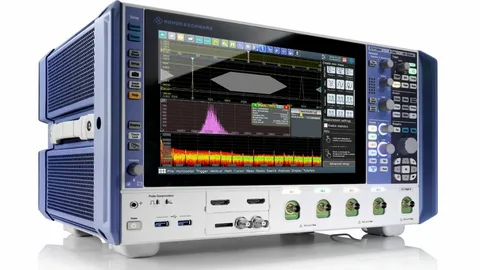
In ideal conditions, an electrical signal should arrive at the receiver with the same shape, timing, and amplitude as it had at the transmitter. In reality, many factors degrade signals as they move through wires and electronic circuits. These include electrical noise, impedance mismatch, electromagnetic interference (EMI), crosstalk between wires, poor grounding, long cable lengths, and improper termination. Signal integrity becomes more important as data speed increases, because high-speed signals are more sensitive to small disturbances.
In robots, signal integrity problems often appear when power electronics and sensitive communication lines share the same space. Motors, motor drivers, and switching power supplies generate large electrical noise and voltage spikes. These can easily interfere with low-level sensor signals or digital communication lines. For example, when a robot starts or stops a motor, sudden current changes can introduce noise that corrupts data coming from a distance sensor or an encoder.
One common practical problem is noise in sensor readings. Suppose a robot uses an analog temperature or gas sensor that outputs a small voltage. If the sensor wire runs close to motor cables, the electromagnetic field from the motor can induce noise into the signal line. As a result, the controller may receive fluctuating or incorrect values. This can cause wrong decisions, such as unnecessary cooling, incorrect alarms, or unstable control loops.
Another practical issue is data corruption in communication protocols. For example, in UART or I²C communication, poor signal integrity can cause missing bits or wrong bit values. The robot may fail to recognize a command or misread sensor data. In CAN Bus systems, excessive noise can lead to repeated communication errors, forcing devices into error states and reducing system reliability.
Crosstalk is also a common signal integrity problem. It happens when signals in one wire interfere with signals in a nearby wire. In a robot with tightly packed wiring, fast digital signals can couple into slower or more sensitive lines. This can cause unexpected voltage spikes that disturb data transmission.
Impedance mismatch and reflections are major problems in high-speed systems such as Ethernet or high-speed SPI. When the impedance of the cable does not match the impedance of the transmitter or receiver, part of the signal reflects back along the cable. This reflection distorts the original signal, leading to timing errors and incorrect data interpretation.
A very practical example can be seen in mobile robots using encoders for wheel position. If the encoder cables are long and not properly shielded, noise from motors can create false pulses. The controller may think the wheel moved more than it actually did, causing navigation errors and inaccurate positioning.
Another example is in robotic arms using Ethernet cameras. Poor-quality cables or improper grounding can cause dropped frames or unstable video streams, affecting vision-based control and object detection.
To reduce signal integrity problems, engineers use several techniques:
- Shielded and twisted-pair cables to reduce noise pickup
- Proper grounding and separation of power and signal cables
- Short cable lengths and correct routing
- Termination resistors for high-speed communication lines
- Differential signaling (such as in CAN or RS-485)
- Filtering and signal conditioning circuits
In conclusion, signal integrity in robots is about preserving the accuracy and clarity of electrical signals from source to destination. Poor signal integrity causes practical problems like noisy sensor data, communication errors, and unstable robot behavior. Ensuring good signal integrity is essential for reliable, precise, and safe robotic operation.