Learning Outcomes
Learning Outcomes
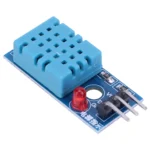
Students learn how temperature and humidity sensors work and understand how environmental conditions can be measured electronically. They become familiar with the difference between temperature and relative humidity and learn how a DHT11 or DHT22 sensor converts environmental conditions into digital data.
Students learn how to use ESP32 GPIO pins for sensor interfacing. By connecting the DHT sensor to a GPIO pin, students understand how a microcontroller communicates with an external digital sensor and how proper power, ground, and data connections are established.
Students also learn the fundamentals of reading digital sensor data. They practice obtaining temperature and humidity values from the sensor and checking whether the received measurements are valid before using them in the program. Through the project, students develop practical skills in Arduino programming, including defining pins, initializing a sensor, reading values, using variables, checking conditions, and displaying results through the Serial Monitor. Finally, students learn how to build a simple environmental monitoring system using an ESP32. The project provides a foundation for more advanced applications such as Wi-Fi monitoring, web dashboards, data logging, automatic alerts, and IoT-based environmental sensing.