Robot Performance Monitoring is the continuous observation and analysis of a robot’s operating condition, movement, accuracy, speed, energy consumption, and task efficiency. Sensors and controllers collect data such as motor speed, joint position, vibration, temperature, current, voltage, and cycle time. This information helps engineers understand whether the robot is operating within its normal performance range.
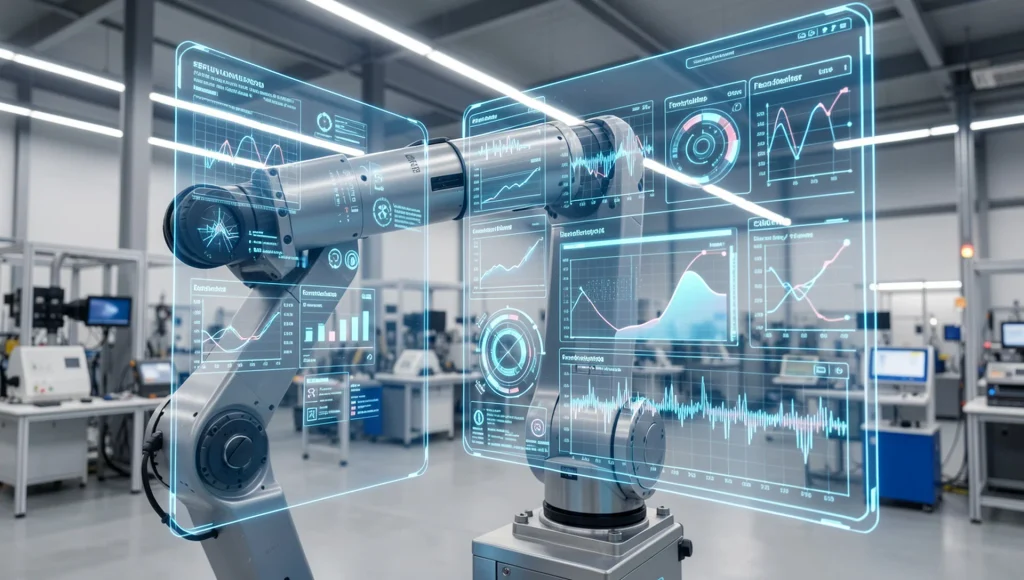
A robot performance monitoring system can compare real-time operating data with predefined reference values. For example, excessive motor current may indicate increased mechanical load, while abnormal vibration can suggest bearing wear, imbalance, or a loose mechanical connection. Similarly, changes in cycle time or positioning accuracy may indicate actuator, encoder, controller, or mechanical problems.
Modern robots can use data analytics and AI to identify performance trends before they develop into serious failures. Historical sensor data can be analyzed to detect gradual increases in temperature, vibration, power consumption, or positioning error. By recognizing these changes early, maintenance teams can investigate the affected component and schedule maintenance before an unexpected breakdown occurs.
Robot Performance Monitoring therefore supports higher reliability, improved productivity, safer operation, and reduced maintenance costs. It is particularly valuable in industrial automation, manufacturing, warehouse robots, and other applications where robots operate continuously. When integrated with predictive maintenance and self-diagnostic systems, performance monitoring provides a continuous picture of robot health and helps maintain consistent operation over its service life.