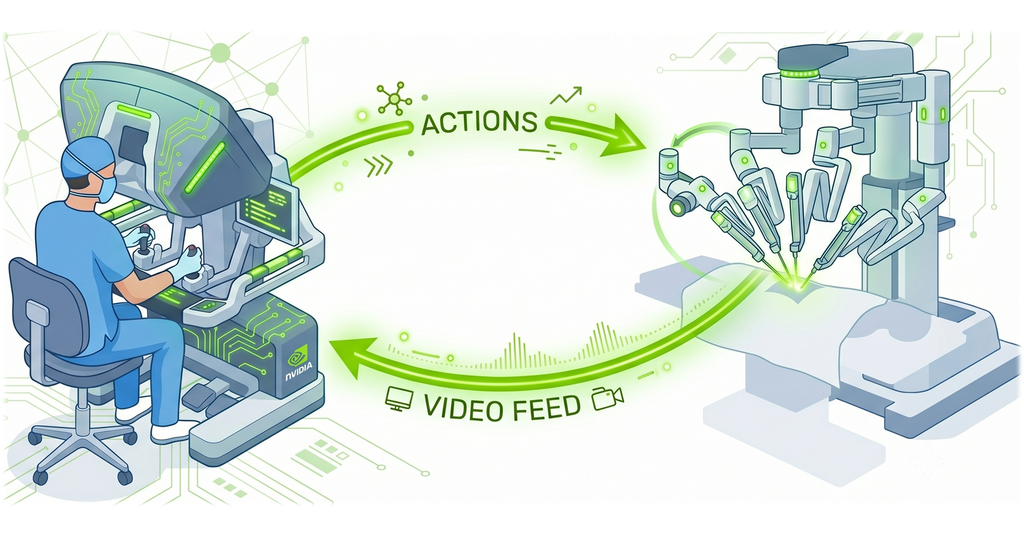
Generative AI for Robotics
Understanding how generative artificial intelligence can improve robot perception, planning, interaction, simulation, and autonomous operation.
What Is Generative AI for Robotics?
Generative AI for robotics refers to the use of artificial intelligence models that can generate text, images, actions, plans, code, simulations, and other useful outputs for robots. Instead of simply classifying information, a generative AI system can create new responses based on a robot’s environment, objectives, available tools, and previous observations.
This technology is creating new possibilities for robots that can understand human instructions, plan complex tasks, generate action sequences, interpret visual information, and adapt to changing environments.
Why Generative AI Matters in Robotics
Traditional robotic systems often depend on carefully programmed rules, predefined behaviors, and task-specific algorithms. Generative AI can provide a more flexible layer of intelligence above these traditional systems.
Flexible Planning
Generative models can help robots create plans for accomplishing complex tasks from high-level human instructions.
Natural Interaction
Robots can use language-based AI to understand natural human commands and produce meaningful responses.
Visual Understanding
AI models can help robots interpret images and connect visual observations with objects, tasks, and actions.
Task Adaptation
Generative AI can help robots modify their behavior when conditions change during a task.
Applications of Generative AI in Robotics
1. Robot Task Planning
A user could give a robot a high-level instruction such as preparing a work area. Generative AI can break this objective into smaller actions, such as identifying objects, selecting tools, moving to appropriate locations, and performing the required operations.
2. Natural Language Control
Generative AI can convert natural language instructions into structured commands that a robotic control system can interpret. This can make robots easier for non-specialists to operate.
3. Robot Code Generation
AI systems can assist engineers by generating programming structures, configuration suggestions, pseudocode, and control logic. Human engineers should still verify generated code before deploying it to physical robots.
4. Simulation and Synthetic Data
Generative models can contribute to the creation of simulated environments, objects, scenarios, and training examples. Synthetic data can help expose robotic perception and decision systems to a wider range of situations.
5. Human-Robot Interaction
Robots equipped with generative AI can potentially maintain more natural conversations, interpret context, answer questions, and provide explanations while performing tasks.
6. Robot Vision
Generative AI can complement computer vision systems by helping connect visual observations with descriptions, task objectives, and possible actions.
How Generative AI Can Work With a Robot
- Receive an instruction: The robot receives a command from a human operator or another system.
- Understand the objective: The AI interprets the instruction and identifies the desired outcome.
- Observe the environment: Sensors and cameras provide information about objects, locations, and environmental conditions.
- Generate a plan: The AI proposes a sequence of actions for achieving the objective.
- Execute through robotic controllers: The generated plan is converted into safe, structured commands for the robot’s control system.
- Evaluate the result: Sensor feedback is used to determine whether the task succeeded or whether the robot needs to adjust its plan.
Generative AI and Robot Decision-Making
One important role of generative AI is assisting robots with decisions that involve multiple possible actions. Rather than following only a fixed set of rules, a robot may consider the current environment, task requirements, available tools, and previous actions before selecting a plan.
Example: A mobile service robot is asked to deliver an object to a person. The AI may interpret the request, identify the target person, determine an appropriate route, avoid obstacles, and decide what to do if the original route becomes blocked.
Benefits of Generative AI for Robotics
- Reduces dependence on manually programmed behaviors.
- Supports natural language interaction.
- Can assist with complex task planning.
- Helps engineers generate and test ideas faster.
- Can improve robot adaptability in changing environments.
- Supports simulation and synthetic training scenarios.
- Can connect perception, reasoning, planning, and action.
- May make advanced robots easier for humans to operate.
Challenges and Limitations
Generative AI also introduces important engineering challenges. A generated response is not automatically correct, reliable, or safe enough for physical robot operation.
- Reliability: AI-generated plans can contain errors.
- Safety: Physical robot actions require strict safety controls.
- Latency: Some AI models may require significant processing time.
- Computing requirements: Advanced models can require substantial hardware resources.
- Uncertainty: AI predictions may change depending on the input.
- Verification: Generated actions should be checked before execution.
- Real-world differences: Simulated environments may not perfectly represent physical environments.
Generative AI Architecture for a Robot
Input Layer
Receives language commands, camera data, sensor measurements, maps, and task information.
AI Layer
Processes information and generates interpretations, plans, text, actions, or other outputs.
Planning Layer
Converts high-level AI output into structured robotic tasks and executable action sequences.
Control Layer
Converts approved actions into commands for motors, actuators, navigation systems, and other hardware.
Feedback Layer
Sensor feedback allows the robot to evaluate its actions and respond to changes in the environment.
Future of Generative AI in Robotics
Generative AI could contribute to a new generation of robots that are more adaptable, interactive, and capable of handling a broader range of tasks. Future robotic systems may combine language models, vision models, reinforcement learning, simulation, sensor fusion, and traditional control algorithms.
The most effective approach is likely to combine generative AI with conventional robotics engineering rather than replacing established control, sensing, planning, and safety systems. AI can provide high-level reasoning while deterministic robotic controllers provide predictable physical execution.
Learning Generative AI for Robotics
Students and engineers interested in this field should develop knowledge of artificial intelligence, robotics, computer vision, sensors, robot programming, motion planning, machine learning, and control systems.
Explore more robotics learning topics through Robotics Engineering Courses and the Artificial Intelligence for Robotics section.
Quick Quiz
1. What is one important use of Generative AI in robotics?
2. Why should AI-generated robot actions be verified?
3. How can Generative AI improve human-robot interaction?