Robotics Engineering Courses
Learning Artificial Intelligence, Robotics, Automation and Intelligent Systems
AI-Based Human–Robot Interaction
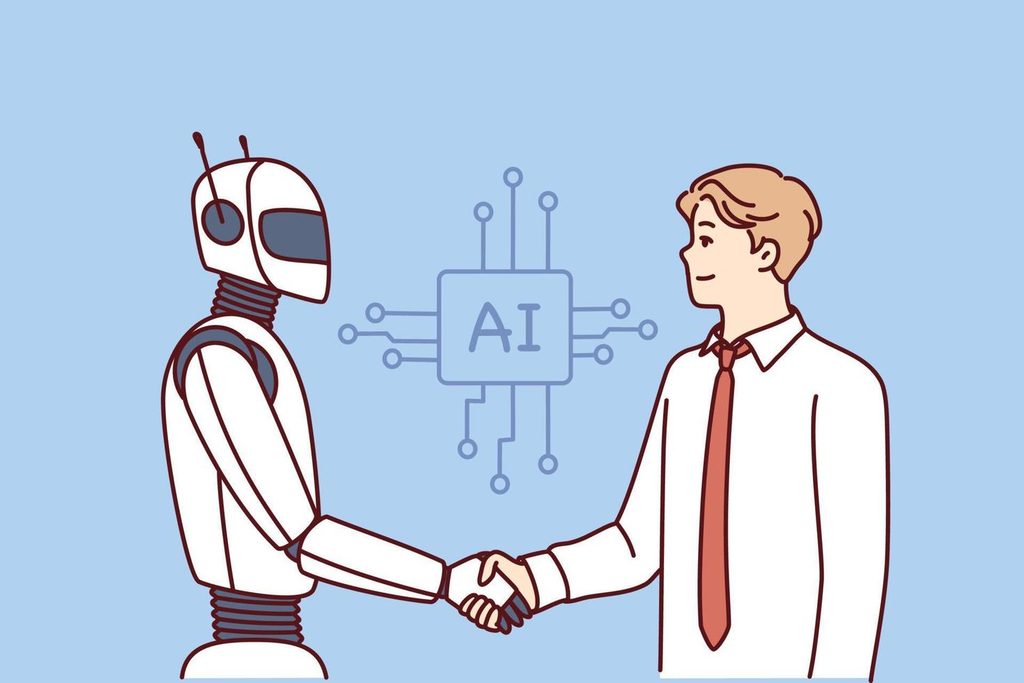
AI-Based Human–Robot Interaction (HRI) combines artificial intelligence, robotics, computer vision, speech processing and machine learning to help robots understand people and respond intelligently to human actions, instructions and intentions.
What Is AI-Based Human–Robot Interaction?
Human–Robot Interaction is the study and design of communication and cooperation between humans and robots. When artificial intelligence is integrated into HRI, robots can process information from their surroundings, recognize human behavior and make decisions based on interaction.
Instead of requiring a person to operate every robot movement manually, an AI-enabled robot can interpret speech, gestures, facial expressions, body movements and environmental information. This allows interaction to become more natural and flexible.
Why AI Is Important for Human–Robot Interaction
Traditional robots often operate according to predefined instructions. Human environments, however, are unpredictable. People may speak in different ways, move unexpectedly or change their intentions.
AI helps robots handle this uncertainty by learning patterns from data and combining information from different sensors and interaction channels.
- Understanding natural human commands.
- Recognizing people and objects.
- Interpreting gestures and body movements.
- Detecting changes in the environment.
- Predicting possible human actions.
- Choosing appropriate robot responses.
- Supporting safer human–robot collaboration.
Main Technologies Used in AI-Based HRI
Speech Recognition
AI can convert spoken language into information that a robot’s control system can understand and use for task execution.
Natural Language Processing
Natural language processing helps robots interpret the meaning and context of human language rather than relying only on fixed commands.
Computer Vision
Vision systems allow robots to detect people, objects, gestures, poses and activities using cameras and AI-based image analysis.
Machine Learning
Machine learning allows robots to recognize patterns and improve their behavior based on previously collected interaction data.
Gesture Recognition
AI can identify gestures such as pointing, waving or hand movements and associate them with possible human intentions.
Human Activity Recognition
Robots can analyze body movements and activities to determine what a person is doing or may do next.
How AI-Based Human–Robot Interaction Works
- Perception: Sensors and cameras collect information about people, objects and the surrounding environment.
- Human Detection: The robot identifies the presence and location of people within its operating area.
- Interaction Recognition: AI analyzes speech, gestures, facial information, movements or other interaction signals.
- Intent Understanding: The robot estimates what the human wants to communicate or accomplish.
- Decision Making: The AI system selects a suitable response or action.
- Robot Response: The robot communicates through speech, movement, displays, gestures or physical actions.
- Feedback: The robot observes the result and can adjust its behavior when necessary.
Examples of AI-Based Human–Robot Interaction
1. Voice-Controlled Robots
A user can give a spoken instruction such as asking a robot to move to a particular location or perform a task. Speech and language processing help convert the instruction into a robot action.
2. Gesture-Based Interaction
A robot equipped with cameras can recognize gestures. For example, pointing toward an object may provide information about which object the human wants the robot to handle.
3. Collaborative Robots
In collaborative environments, AI can help robots interpret human movements and coordinate their actions with workers.
4. Social Robots
Social robots can use speech, facial information, gestures and conversational AI to create more natural interactions with people.
5. Assistive Robots
AI-based interaction can help robots respond to human requests in environments where intuitive communication is important.
Human Intent Recognition
One of the most important challenges in HRI is determining what a person actually intends to do. The same movement or spoken phrase can have different meanings depending on the context.
AI systems can combine multiple signals, such as speech, visual information, body posture and previous interaction history, to estimate human intent.
AI and Natural Robot Communication
Effective HRI requires communication in both directions. The human communicates with the robot, and the robot must communicate its own actions or intentions back to the human.
- Voice and spoken responses.
- Robot arm and body gestures.
- Head and eye movements.
- Visual displays.
- Auditory signals.
- Movement-based communication.
Combining several communication methods can make robot behavior easier for humans to understand.
Advantages of AI-Based HRI
- Natural communication: Humans can interact using more familiar communication methods.
- Adaptability: Robots can respond to changing situations.
- Reduced manual control: Users do not need to control every robot movement.
- Improved collaboration: Humans and robots can coordinate tasks.
- Context awareness: AI can use environmental and interaction information when making decisions.
- Personalization: Some systems can adapt responses according to interaction history.
Challenges of AI-Based Human–Robot Interaction
Designing reliable HRI systems is difficult because humans communicate using complex language, gestures, emotions and social behaviors.
- Speech can be ambiguous or difficult to recognize.
- Human gestures can vary between individuals.
- Lighting and environmental conditions can affect computer vision.
- AI predictions may contain errors.
- Robots must respond safely around people.
- Real-time AI processing can require significant computing resources.
- Human privacy and responsible use of interaction data must be considered.
AI-Based HRI in Different Applications
| Application | Possible AI Interaction | Robot Role |
|---|---|---|
| Manufacturing | Gesture and movement recognition | Collaborative worker assistant |
| Education | Speech and conversational interaction | Learning assistant |
| Healthcare | Voice, activity and context recognition | Assistive robot |
| Homes | Voice and object recognition | Domestic assistant |
| Public Services | Speech and person recognition | Information assistant |
Future of AI-Based Human–Robot Interaction
Future robots are expected to become increasingly capable of understanding natural human communication and responding to changing environments. Advances in artificial intelligence may allow robots to combine vision, language, movement and contextual information more effectively.
The long-term goal is not simply to make robots more intelligent, but to make human–robot collaboration safer, easier and more intuitive.
AI-based HRI will therefore remain an important area of robotics engineering, particularly for service robots, collaborative robots, educational robots and autonomous systems.
Quick Quiz: AI-Based Human–Robot Interaction
1. What does HRI primarily study?
2. Which technology can help a robot understand spoken commands?
3. Why is human intent recognition important?
Explore More Robotics Topics
Continue learning about artificial intelligence and robotics through other articles on Robotics Engineering Courses .
You can also explore the Artificial Intelligence for Robotics topic area for more AI-focused robotics lessons.