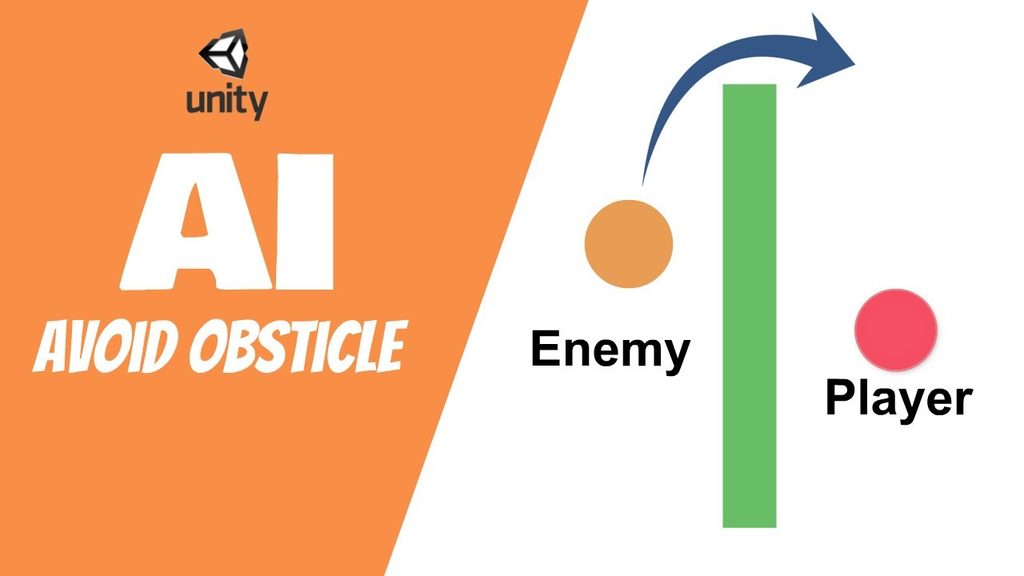
AI-Based Obstacle Avoidance
How artificial intelligence helps robots detect obstacles, understand their surroundings, and navigate safely through dynamic environments.
AI-based obstacle avoidance is a robotics technique that allows a robot to detect obstacles and automatically select a safer movement path. Instead of following only a fixed set of rules, an AI-enabled robot can use sensor information, perception algorithms, and decision-making methods to respond to changing environments.
What Is AI-Based Obstacle Avoidance?
Obstacle avoidance is an important capability of autonomous robots. A robot moving through a room, warehouse, road, laboratory, or outdoor environment may encounter people, furniture, vehicles, walls, boxes, or other unexpected objects.
AI-based systems process information from sensors and estimate what is around the robot. The robot can then determine whether an obstacle presents a collision risk and select an appropriate movement.
Basic Concept
Sense → Perceive → Predict → Decide → Move → Re-evaluate
This continuous cycle allows an autonomous robot to react as its surroundings change.
Why AI Is Useful for Obstacle Avoidance
Traditional obstacle avoidance can use simple rules such as “turn left when an object is detected.” Such rules can work in controlled environments but may become inefficient when there are multiple obstacles or moving objects.
AI can help robots interpret more complex sensor information and make decisions based on the current environment. Machine learning and other AI techniques can also help a robot recognize patterns in situations it encounters repeatedly.
- Handles changing environments.
- Supports intelligent navigation decisions.
- Can distinguish different types of objects.
- Can estimate potential collision risks.
- Can work with multiple sensor inputs.
- Can support autonomous mobile robots.
Sensors Used for AI-Based Obstacle Avoidance
AI-based obstacle avoidance normally depends on sensor data. Different robots use different combinations of sensors depending on their application.
Cameras provide visual information that can be analyzed to detect objects, surfaces, people, and free space.
Depth information helps estimate how far objects are from the robot.
LiDAR can provide distance measurements and help construct a representation of the surrounding environment.
Ultrasonic sensors can detect nearby objects and are commonly used for short-range obstacle detection.
How the AI Obstacle Avoidance Process Works
- Sensor data collection: The robot collects information from cameras, distance sensors, LiDAR, or other sensors.
- Perception: AI algorithms analyze the sensor information to identify obstacles and available space.
- Environment understanding: The robot estimates where obstacles are located relative to its position.
- Risk assessment: The system estimates whether the current trajectory could lead to a collision.
- Decision making: The robot selects an appropriate action, such as slowing, stopping, turning, or changing its path.
- Motion control: The selected command is sent to the robot’s motors.
- Continuous monitoring: The robot repeatedly checks its environment and updates its movement decision.
AI Techniques for Obstacle Avoidance
Machine Learning
Machine learning can be used to identify patterns in sensor data. A robot may learn to recognize different environmental situations and select suitable actions.
Deep Learning
Deep learning can process complex visual information. For example, a vision system can help identify objects and estimate areas where a robot can safely travel.
Reinforcement Learning
Reinforcement learning can allow an agent to learn navigation behaviors through interaction with an environment. Actions that produce desirable results can receive positive rewards, while unsafe or inefficient behavior can receive penalties.
AI-Based Path Planning
Obstacle avoidance is often combined with path planning. The robot does not simply detect an obstacle; it attempts to determine an alternative route that allows it to continue toward its destination.
Example: Warehouse Robot
Consider an autonomous warehouse robot transporting a package. It is moving toward a delivery location when another vehicle suddenly enters its path.
- The robot detects the vehicle using its sensors.
- The perception system estimates its position.
- The navigation system determines that the current path is unsafe.
- The AI system evaluates alternative movement options.
- The robot slows down or changes direction.
- The robot continues toward its destination after the path becomes safe.
This example demonstrates why obstacle avoidance and intelligent navigation are closely connected in autonomous robotics.
AI-Based Obstacle Avoidance vs. Simple Rule-Based Avoidance
Rule-based approach: The robot follows predefined instructions such as turning when a sensor detects an object.
AI-based approach: The robot can combine sensor information, perception, prediction, and decision-making to select an action based on the current situation.
Challenges
- Changing lighting conditions can affect camera-based perception.
- Moving objects are more difficult to predict than stationary obstacles.
- Sensor noise can produce inaccurate measurements.
- AI models require suitable training and testing.
- Real-time decisions must be made quickly.
- Limited computing power can restrict complex AI algorithms.
- Safety is critical when robots operate near people.
Applications
- Autonomous mobile robots
- Warehouse robots
- Service robots
- Delivery robots
- Industrial robots
- Agricultural robots
- Hospital robots
- Educational robotics platforms
- Autonomous vehicles
- Search and inspection robots
Future of AI-Based Obstacle Avoidance
Future robotic systems are expected to combine multiple sensors with increasingly capable AI models. Robots may become better at predicting the movement of people and vehicles, understanding complex environments, and selecting safer paths in real time.
AI-based obstacle avoidance will therefore remain an important technology for autonomous robotics. Its combination with computer vision, localization, mapping, path planning, and motion control can help robots operate more independently.
Key Takeaways
- AI-based obstacle avoidance enables robots to react intelligently to obstacles.
- Sensor data provides information about the robot’s environment.
- AI can help identify obstacles and evaluate possible actions.
- Obstacle avoidance is closely related to autonomous navigation.
- Machine learning, deep learning, and reinforcement learning can support intelligent behavior.
- Real-time performance and safety are essential for practical robotic systems.
Explore more robotics engineering learning resources at Robotics Engineering Courses .
Quick Quiz
1. What is the main purpose of obstacle avoidance?
2. Which sensor can provide visual information?
3. What can reinforcement learning help a robot learn?