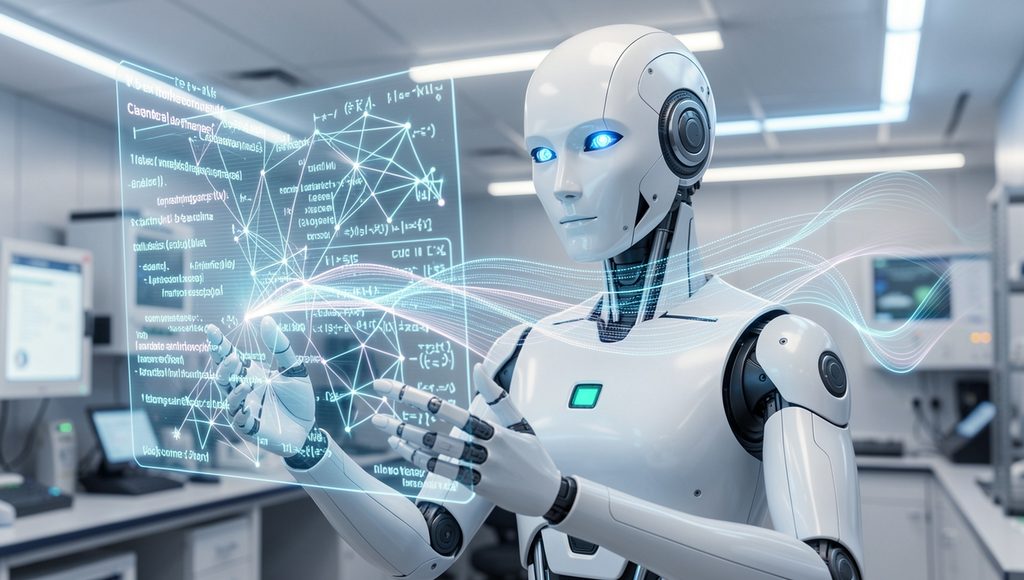
Natural Language Processing for Robots
Natural Language Processing (NLP) allows robots to understand, interpret and respond to human language. It provides an important connection between people and intelligent robotic systems, making interactions more natural and easier to use.
Natural Language Processing for Robots combines artificial intelligence, language understanding, speech technologies and robotics. Instead of requiring users to operate complex controls, an NLP-enabled robot can accept spoken or written instructions and convert them into meaningful actions.
What Is Natural Language Processing?
Natural Language Processing is a branch of artificial intelligence concerned with enabling computers and machines to work with human language. Human communication can contain different accents, sentence structures, expressions, incomplete instructions and contextual meanings. NLP technologies help machines process these characteristics.
In robotics, NLP can be used to transform a human instruction such as “Please bring me the book from the table” into information that a robot can understand and execute.
Why NLP Is Important for Robots
Traditional robots often require buttons, graphical interfaces, programming commands or specially designed control systems. NLP provides another communication method in which people can interact with robots using familiar language.
Natural Communication
Users can communicate with robots through ordinary words and sentences instead of complicated control interfaces.
Command Understanding
NLP helps robots identify important actions, objects, locations and other information contained in human instructions.
Context Awareness
Advanced systems can use conversation history and environmental information to interpret commands more effectively.
How NLP Works in Robots
An NLP-based robotic system generally combines language processing with speech recognition, artificial intelligence, perception, planning and robot control. The exact architecture varies according to the robot and its application.
1. Human Input
The process begins when a person speaks or types a command. For example, a user may tell a service robot, “Move to the kitchen.”
2. Speech or Text Processing
If the instruction is spoken, a speech-recognition system can convert the audio signal into text. Text-based commands can enter the NLP system directly.
3. Language Understanding
The NLP system analyzes the sentence to determine its meaning. Important information may include the requested action, object, location, quantity and other parameters.
4. Intent Identification
The robot determines what the user wants it to accomplish. An instruction might represent navigation, object manipulation, information retrieval or another task.
5. Task Planning
The interpreted instruction is passed to the robot’s planning system. The robot determines the actions required to accomplish the requested task.
6. Robot Action
The robot executes the planned actions using its sensors, actuators, navigation system and control software.
7. Response
After completing or attempting the task, the robot can provide feedback through speech, text, sounds, gestures or another communication method.
Key NLP Technologies Used in Robotics
| Technology | Purpose in Robotics |
|---|---|
| Speech Recognition | Converts spoken language into text or machine-readable information. |
| Natural Language Understanding | Determines the meaning and intent of a human instruction. |
| Intent Recognition | Identifies the task or goal requested by the user. |
| Entity Recognition | Identifies objects, people, locations, quantities and other relevant entities. |
| Dialogue Management | Helps robots maintain and manage multi-turn conversations. |
| Natural Language Generation | Allows robots to generate understandable responses. |
| Context Processing | Uses previous conversation and environmental information to improve interpretation. |
Example of NLP-Based Robot Interaction
Human: “Please take the red box to the office.”
The robot identifies:
- Action: Take or transport
- Object: Red box
- Destination: Office
The robot then combines the language information with its perception, object-detection, navigation and manipulation systems.
Robot: “I will take the red box to the office.”
NLP and Human–Robot Interaction
NLP is particularly important in Human–Robot Interaction (HRI). It enables people to communicate with robots using language instead of relying entirely on physical controllers or specialized interfaces.
For example, a person could ask a domestic robot to clean a room, instruct a warehouse robot to move an item, or ask an educational robot a question. The robot must interpret the language and connect it to appropriate actions or responses.
Learn more about Human–Robot Interaction and related robotics concepts.
Applications of NLP for Robots
Home Robots
Domestic robots can receive commands for cleaning, navigation, reminders and other household activities.
Healthcare Robots
Robots can use language interfaces to support communication, information delivery and certain assistance tasks.
Educational Robots
Educational robots can interact with students, answer questions, provide instructions and support interactive learning.
Industrial Robots
Language interfaces can make certain industrial systems easier to configure, monitor and operate.
Service Robots
Robots operating in hotels, offices, restaurants and public environments can use NLP to communicate with visitors.
Social Robots
Social robots can use conversation to create more natural interactions with people.
Benefits of Natural Language Processing for Robots
- Provides a more natural human–robot communication method.
- Reduces dependence on complicated control interfaces.
- Allows users to issue commands using ordinary language.
- Can improve accessibility for users who find traditional interfaces difficult.
- Supports conversational interaction between humans and robots.
- Can combine language information with sensor and environmental data.
- Allows robots to provide understandable feedback and explanations.
Challenges of NLP in Robotics
Although NLP can significantly improve robot interaction, robots operate in the physical world, which creates additional challenges.
Ambiguous Language
Human language can be ambiguous. A command such as “Put it over there” requires the robot to understand what “it” refers to and where “there” means.
Different Accents and Speech Patterns
Robots that use speech recognition must deal with different accents, speaking speeds, background noise and pronunciation patterns.
Context Understanding
A robot may need information from previous conversation or its surroundings to correctly interpret a command.
Real-World Grounding
Understanding a sentence is not enough. The robot must connect words such as “cup,” “table” and “left” to actual objects, locations and actions in its environment.
Safety
Robots must carefully interpret instructions before performing physical actions. Safety mechanisms should prevent unexpected language interpretations from causing dangerous behavior.
NLP, AI and Robot Perception
NLP becomes more powerful when combined with other artificial intelligence technologies. A robot can combine language with visual, auditory and spatial information to understand a situation.
For example, if a person says “Pick up the blue cup,” the robot may need to use NLP to identify the instruction and computer vision to locate the blue cup. Robot perception and environmental sensing then help the robot understand its surroundings.
This combination creates a connection between what a person says and what a robot can physically perceive and do.
Future of NLP in Robotics
The future of NLP-enabled robotics is moving toward more flexible, conversational and context-aware interaction. Robots are increasingly being designed to understand natural instructions rather than requiring users to learn rigid command structures.
Future robotic systems may combine language understanding with perception, reasoning, planning, memory and learning. This could allow robots to participate in longer conversations, understand changing instructions and adapt their actions to different situations.
As artificial intelligence and robotics continue to develop, NLP is likely to remain an important technology for creating intuitive Human–Robot Interaction.
Conclusion
Natural Language Processing gives robots an important ability: communicating with humans through language. By combining speech recognition, language understanding, intent detection, context processing, planning and robot control, NLP can transform a simple human instruction into a physical robotic action.
From home and educational robots to healthcare, industrial and service robots, NLP can make robotic systems easier and more natural to interact with. Its continued development will play an important role in the future of intelligent robotics and Human–Robot Interaction.
Explore More Robotics Topics
Visit the Robotics Engineering Courses homepage to explore more articles and learning resources about robotics, artificial intelligence and automation.
You can also explore the Human–Robot Interaction (HRI) section for related topics.