Service Robots: From Science Fiction to Everyday Life 🤖 Service Robots From futuristic ideas in science fiction to practical machines, service robots are becoming useful partners in everyday life, industry, healthcare, and public service. From Science Fiction to Reality For many years, robots were mostly imagined as futuristic machines appearing in science-fiction movies and books. […]
Category: Robotics
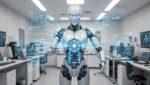
Hierarchical Decision Making
Robot Decision-Making Process 🤖 Robot Decision-Making Process Discover how an intelligent robot senses its environment, understands situations, evaluates choices, takes action, and continuously learns from new information. How Does a Robot Make a Decision? A robot does not simply move randomly. An autonomous robot follows a structured decision-making process. It collects information from its environment, […]
Sun Lamps
Sun lamps are special lights that mimic the light of the sun. People use them for things like improving mood, regulating sleep, and helping with seasonal energy dips — especially in places where winters are long and daylight is limited. 🌞 What Sun Lamps Are Sun lamps (also called light therapy lamps or SAD lamps) […]

UV technology
Ultraviolet (UV) technology is based on the use of ultraviolet radiation, a form of electromagnetic energy with wavelengths shorter than visible light but longer than X-rays. UV light is divided into three main categories: UV-A (315–400 nm), UV-B (280–315 nm), and UV-C (100–280 nm). Among these, UV-C has the strongest germicidal properties, making UV technology […]

UV lamps
Ultraviolet (UV) lamps are special light sources that emit ultraviolet radiation, which lies just beyond the violet end of the visible light spectrum. Unlike ordinary bulbs that mainly produce visible light, UV lamps are designed to generate specific UV wavelengths: UV-A (315–400 nm), UV-B (280–315 nm), and UV-C (100–280 nm). Each type has different properties […]
UV-C LEDs
UV-C LEDs are a specialised class of light-emitting diodes that produce ultraviolet light in the UV-C band, typically between 200 and 280 nanometers. This wavelength range is particularly important because it has strong germicidal properties, meaning it can deactivate bacteria, viruses, and other microorganisms by damaging their DNA or RNA. Unlike traditional UV lamps that […]
UVD robots
DefinitionUVD robots are autonomous or semi-autonomous robotic systems that use ultraviolet (UV-C) light to disinfect and sterilize environments by inactivating microorganisms such as bacteria, viruses, and fungi. UV-C light, typically in the wavelength range of 200–280 nanometers, damages the DNA or RNA of pathogens, preventing them from reproducing and causing infection. UVD robots are widely […]
NAO robots
DefinitionNAO is a programmable humanoid robot developed by Aldebaran Robotics (now SoftBank Robotics). Standing about 58 cm tall, NAO is designed to interact naturally with humans through speech, movement, vision, and touch. It is widely used in education, research, and human–robot interaction (HRI) studies because of its friendly appearance, rich sensors, and flexible software platform. […]
Telepresence Robots
Telepresence robots are remotely controlled robotic systems that allow a person to be virtually present in a distant location. They typically consist of a mobile base, cameras, microphones, speakers, and a display screen that shows the remote user’s face. Through an internet connection, the user can see, hear, speak, and move around the remote environment […]
Hierarchical Decision-Making
Hierarchical Decision-Making DefinitionHierarchical decision-making is an approach in artificial intelligence and robotics where complex decision processes are structured into multiple levels of abstraction. Instead of making all decisions at a single level, the system breaks a large, complex problem into smaller, more manageable sub-problems arranged in a hierarchy. High-level layers focus on long-term goals and […]