Robot Chassis
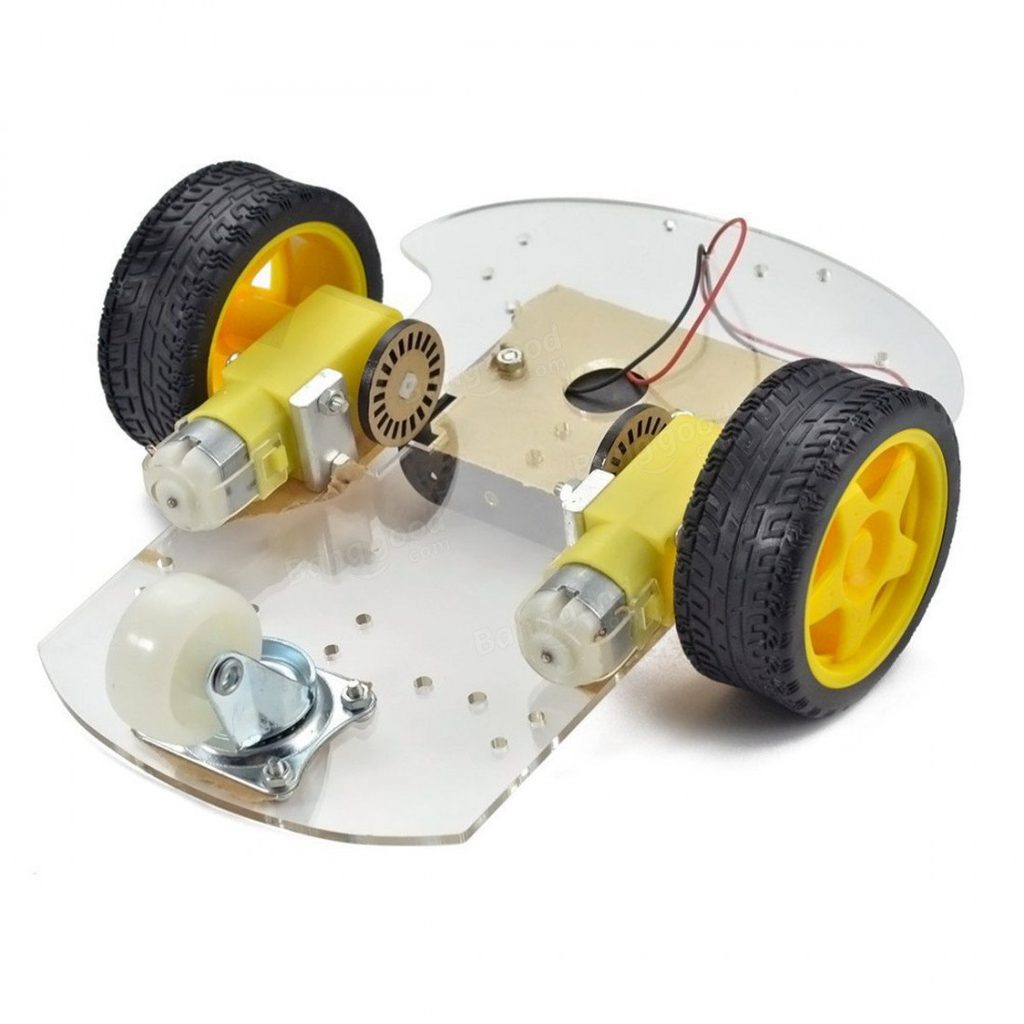
The Robot Chassis is the mechanical foundation of a DIY obstacle-avoiding robot. A typical 2WD chassis consists of a lightweight acrylic or similar rigid base plate, two DC gear motors, two wheels, and a caster wheel for balance. The chassis provides mounting points for the Arduino or other microcontroller, motor driver, battery holder, and obstacle-detection sensor.
The chassis is designed to keep the robot compact while providing enough space for its electronics. Pre-drilled mounting holes make it easier to secure the controller, motor driver, battery pack, and sensor without modifying the base. For obstacle-avoiding applications, the front section can accommodate an HC-SR04 ultrasonic sensor, sometimes mounted on an SG90 servo so the sensor can scan different directions.
A good Robot Chassis should be strong, lightweight, stable, and easy to assemble. Its two driven wheels allow differential steering: the robot can move forward, reverse, turn left, or turn right by independently controlling the motors through a motor-driver module. This makes the chassis suitable for Arduino robotics projects, STEM education, maze-solving robots, and autonomous obstacle-avoidance experiments.